Leaf Blowers: Go Electric
Gas-powered leaf blowers have become so widely used in suburbs like Ridgewood that there’s no escaping them— during the fall, but also during spring cleanups and even over the summer. Few residents are fond of the blowers’ sustained low-frequency roar that can be heard from blocks away. But these devices are more than just an annoyance— they can harm the local environment and the health of residents.
Air Pollution and Respiratory Effects
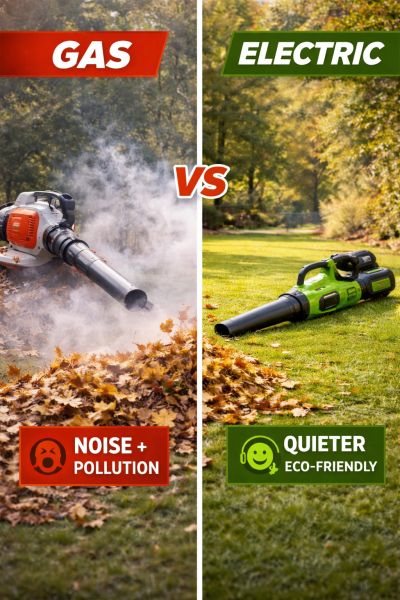
Two-stroke gas-powered blowers emit fine particulate matter and burn fuel inefficiently, producing very high levels of pollutants for such small engines. These emissions can reduce lung function, exacerbate asthma and COPD, and increase the risk of cardiovascular disease. Some of these hazardous air pollutants— like benzene, formaldehyde, and 1,3-butadiene— are linked to cancer, long-term cardiovascular, and respiratory disease. One independent testing lab found that running a two-stroke blower for 30 minutes produced as many hydrocarbons as driving a Ford F-150 truck from Texas to Alaska. Gas leaf blowers also lift dust, mold spores, pesticides, heavy metals, and animal waste into the air at high rates. This increases exposure to allergens and respiratory irritants, particularly for vulnerable populations such as children, the elderly, and people with asthma.
Noise Pollution and Hearing Damage
Gas leaf blowers typically operate at 85-100+ decibels, above occupational safety thresholds. Noise from a single gas blower can affect an entire neighborhood, penetrating walls and windows and contributing to hearing loss, stress, sleep disruption, cardiovascular effects, and diminished cognitive performance. Their high velocity air jets also destroy nests and habitats, damage and dry out pollen, sap and other natural plant substances, remove beneficial topsoil and mulch, and injure or destroy birds, small mammals, and beneficial insects that live in the leaf litter.
Electric leaf blowers offer a practical and increasingly viable alternative. They produce zero source emissions, significantly reducing direct air pollution. They also offer meaningful reductions in noise. Studies indicate that battery-powered blowers operate at an average of around one-tenth the sound levels of gas-powered models.
Several companies now offer professional-grade battery-powered leaf blowers that are on par with gas models in both cost and performance. In fact, taking gas prices into account, electric blowers can be cheaper than gas-powered blowers over time.
For these various reasons, other New Jersey communities such as Maplewood and Montclair have banned two-stroke gas-powered blowers.
This year, consider switching from gas-powered to electric leaf blowers, or ask your landscaper to do so— or to at least to skip the use of gas-powered leaf blowers whenever possible. Finally, consider even more sustainable landscaping practices like raking and leaving the leaves.